Jehue Gordon is eyeing a third Olympic Games. In recent years, the Maraval athlete was based in the United States, but returned to Trinidad and Tobago last year, reuniting with Dr Ian Hypolite, the man who coached him to the men’s 400 metres hurdles world title back in 2013.
Gordon produced a 47.69 seconds national record run to secure that IAAF World Championship gold medal.
In the seasons that followed, however, he was unable to get close to that time, an abdominal injury and subsequent surgery hindering his progress.
Gordon had been working hard in an effort to regain his lost form in the build-up to the July 24 to August 9 Olympic Games in Tokyo, Japan. But COVID-19 happened, and Tokyo 2020 was postponed. Now, he will have to wait an additional year to return to the Olympic stage.
Gordon (JG) spoke to Express sports journalist Kwame Laurence (KL) about his Olympic preparations and the challenges he faces in the wake of the coronavirus outbreak.
KL: Would you have preferred the Olympics in 2020 or 2021?
JG: I would have loved the Olympics to be this year granted the COVID-19 didn’t happen. There was already limited support for preparation so far and I can only imagine how it would be another year with the main focus to treat this pandemic.
KL: Before the announcement of the Olympic postponement, how was training going?
JG: Training started a bit rough, finding my groove again with Coach Hypolite. It’s been taking me some time adjusting but over the last month I have seen significant improvements in my form and times.
KL: Did lack of access to facilities disrupt your training programme or were you one of the athletes with special permission to use the Hasely Crawford Stadium?
JG: When the initial announcement was made, access to the facility was a problem but it won’t be the first time it happened, so I just worked on what was available to me on grass fields. However, I did receive a call from the secretary of the NAAA (Dexter Voisin) that my name was on the list, and I’m grateful for that.
KL: With the postponement, will you be shutting down your training for now, continuing or changing the programme and intensity?
JG: Honestly, motivation is not the same. There is no guarantee that there would be a season. I spoke to my agent and he said it’s 50-50. However, there were some promoters that were still interested in putting on meets. The question is the few meets that may be available, would I be able to get in seeing that I’m not in the top 10 in the world? The smaller meets that had already reached out have either cancelled or postponed until further notice. Currently, I’m just trying to keep as fit, inside, as possible.
KL: Were you on track to achieve the 48.90 seconds Olympic qualifying standard?
JG: I can’t say if I was on track for qualification. As I did mention earlier, my times were starting to show good promise and it was something that had me motivated leading up to the months ahead.
KL: Does the Olympic postponement mean you’ll be in better shape for the Games as you now have an additional year to prepare?
JG: Having a further year to prepare doesn’t guarantee being in better shape. If I go this entire year without competition until next season, that will make things a bit more difficult. For those who are injured and recovering it bodes well, but for someone like myself who needs races it may be a deterrent.
KL: Would Jehue Gordon have been ready to be back among the best 400 hurdlers in the world had the Olympics been staged this year?
JG: The best 400 hurdlers in the word are currently running 46 seconds. I’m not ready for that kind of heat as yet. Being competitive with the rest of the competitors; that’s more my aim for now until my rhythm and confidence get back to where they need to be.
KL: Are you expecting to get the opportunity to compete in 2020, or is this season lost?
JG: My coach and I haven’t spoken about what we want to do next, but some form of testing, competition and assessment need to be done in order to see how we are progressing with the work we would have put in for 2020.







 :Article :Clearing hurdles :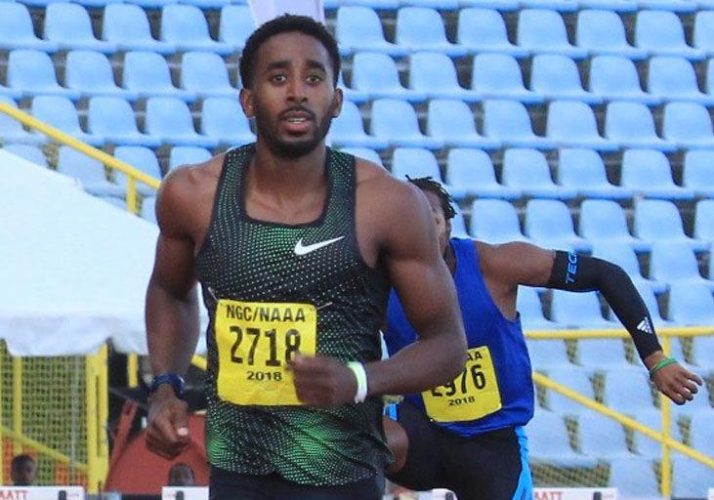
 :
: